
Kids' Salon Franchise: The Business Model That Blends Repeat Customers with Investor Visa Opportunities
September 10, 2026 · The Franchise Group USA
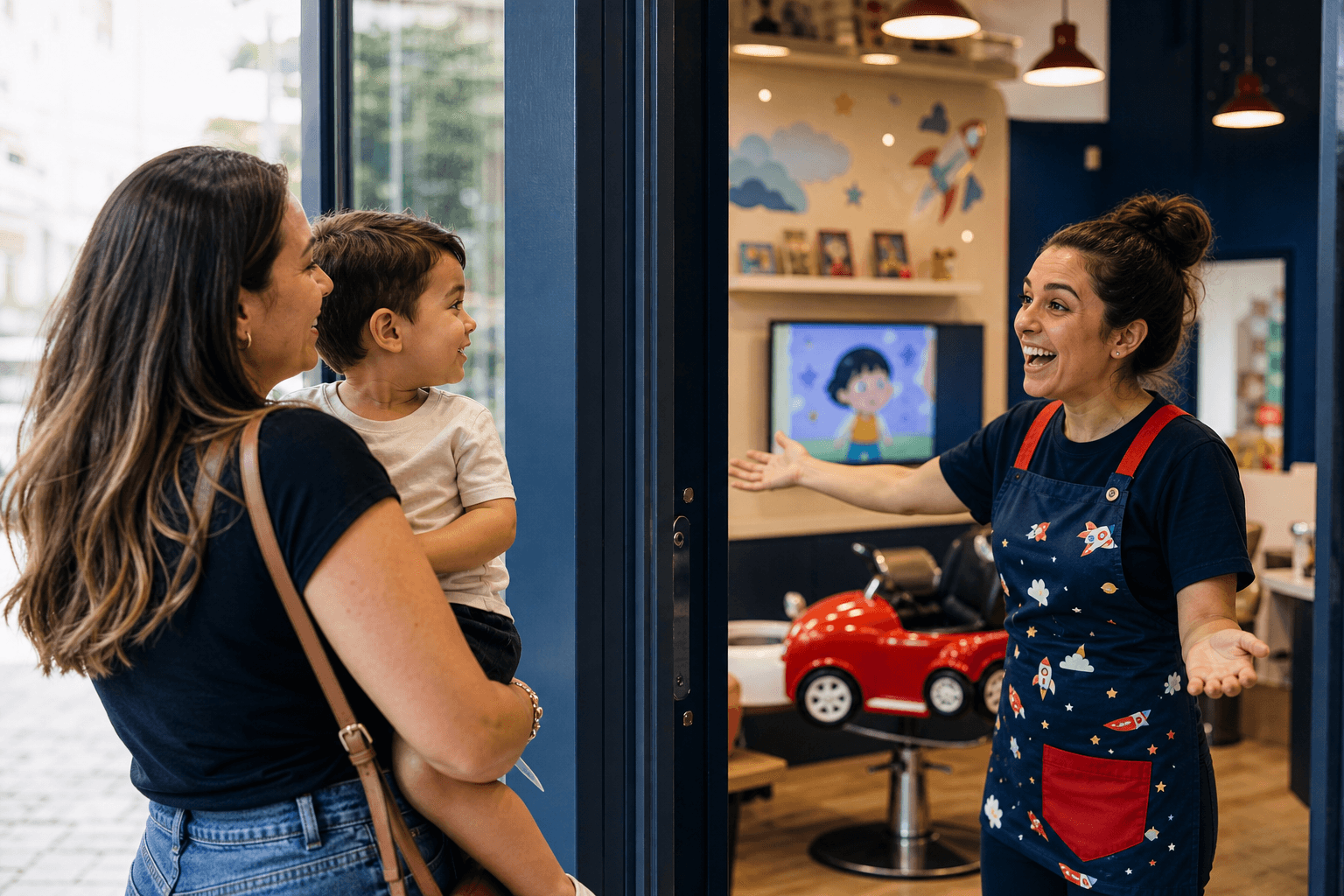
Picture this: It's Saturday morning, and a mom walks in with her five-year-old, who starts screaming at the mere sight of scissors. Instead of a traditional salon, she finds a car-shaped chair, cartoons playing on a TV, and a stylist specifically trained to handle these kinds of meltdowns. Twenty minutes later, the haircut's done, the child is smiling, and the mom has already booked the next appointment for six weeks out. This scene, playing out for thousands of American families every month, is the backbone of a niche that's really grabbing the attention of Latin American investors: the kids' hair salon.
If you're considering opening a business in the United States and looking for something that blends operational simplicity with a customer flow that doesn't rely on passing fads, it's worth understanding why this segment frequently comes up in our discussions here at TFG.
Why This Segment Has Natural Repeat Business
Kids' hair grows. No matter the economy, the season, or the latest trend, families come back. This is the primary factor that sets this segment apart from other child-focused businesses, like play gyms or party venues, which rely on special occasions. Here, visits are routine, much like going to the dentist or pediatrician, but often more frequent and a lot more fun.
Beyond just haircuts, these models often bundle birthday packages, "first haircut" experiences (an emotional milestone for many American families), and kids' hair care products sold right at the counter. This mix of recurring service revenue plus impulse buys provides owners with a more predictable cash flow than purely seasonal businesses.
How the Business Works Day-to-Day
The operation itself is lean and efficient. It typically occupies a small to medium-sized commercial space, often in a neighborhood shopping center or strip mall, close to schools and residential areas with young families. The team consists of beauty professionals specifically trained to work with children. This is different from cutting adult hair: it requires patience, resourcefulness, and sometimes distraction tricks, all part of the franchise's specialized training.
Unlike food businesses, there's no kitchen, no perishable suppliers, and no complex health department regulations. Unlike residential services, there's no travel to the customer's home and no fleet of vehicles to manage. Customers come to the salon, the service cycle is short, and the routine is highly standardized. This makes it easier for new operators to learn the ropes and for owners considering opening a second location down the line.

Comparing with Other Franchise Categories
For those deciding between different segments, it helps to look side-by-side at how the owner's day-to-day changes. The table below compares kids' salons with other common categories among investors we advise.
| What Changes | Kids' Salon | Residential Services | Food & Beverage |
|---|---|---|---|
| Type of Location | Retail space in strip malls or neighborhood centers | Office or home base, no public-facing store | Commercial space with foot traffic |
| Owner Presence | Can delegate operations after training a manager | Requires managing a field team | High, especially in the first few months |
| Seasonality | Low, with peaks around back-to-school | Varies by service (e.g., HVAC, landscaping) | Moderate to high |
Our takeaway for investors is consistently this: a kids' salon tends to require less physical presence from the owner than residential services, and less exposure to demand fluctuations than many food businesses. That's not to say it's easier, but the day-to-day profile is distinct, and for someone starting their entrepreneurial journey in the U.S., a predictable routine often weighs heavily in its favor.
What Makes Up the Investment
We won't quote specific figures here, as each franchise in this segment has its own detailed cost structure outlined in Item 7 of its FDD (the disclosure document every American franchise is legally required to provide). What we can explain are the typical categories that make up this investment and why they vary:
- Initial franchise fee, which grants access to the brand, training system, and opening support.
- Build-out and equipment, which in this segment includes themed chairs, entertainment stations, and adapting the environment for children, elements that carry more weight here than in a conventional adult salon.
- Initial inventory of hair care products and retail items sold at the counter.
- Working capital to cover the initial months of operation while the recurring customer base is still building.
Each franchise has a different composition for these categories, and it's precisely this kind of detailed analysis we provide when comparing specific brands within the segment with you.
E-2 Visa: Why This Type of Business Usually Fits Well
The E-2 visa requires, among other things, an active and operational business that creates jobs and is not passive. A kids' salon with its own staff, a physical location up and running, and recurring operations typically fits this description well, as it's a genuine brick-and-mortar business with local hiring and continuous revenue.
This is not a guarantee of approval: each case is evaluated by licensed immigration attorneys who review the investor's profile, the business's history, and the complete documentation. If you're still deciding between the E-2 and EB-5 visas, we have an article dedicated solely to that comparison that's worth reading before you proceed.
A Quicker Route: Salon Already Operating in Florida
Some investors prefer not to start from scratch. For these individuals, we sometimes have existing salons in this segment available in Florida, already up and running with an established history for review. This changes the dynamic of the process because instead of opening a brand-new business, you're stepping into an operation that already has an established customer base. If this quicker route interests you, reach out to us to find out what's currently available.
The Next Step
This kind of decision often becomes clearer in a conversation than in an article, as it involves your capital, your immigration profile, and the kind of daily life you envision for yourself in the U.S. At TFG, we guide you through this entire process, from that initial chat right up to your business opening its doors, all at no extra cost to you. This includes brand selection within this segment, developing your business plan, and even connecting you with our partner immigration attorney to evaluate the right visa pathway.
Schedule a free consultation with a TFG advisor and bring all your questions, even the ones that seem basic. That's precisely where a solid plan truly begins to take shape.
Comments
Be the first to comment.
Ready to find your path?
Take the 2-minute quiz. Our team shows you what fits your capital and your timeline.