
The Franchise Market in the United States and Brazil: Sectors, Numbers, and Trends
July 23, 2026 · The Franchise Group USA
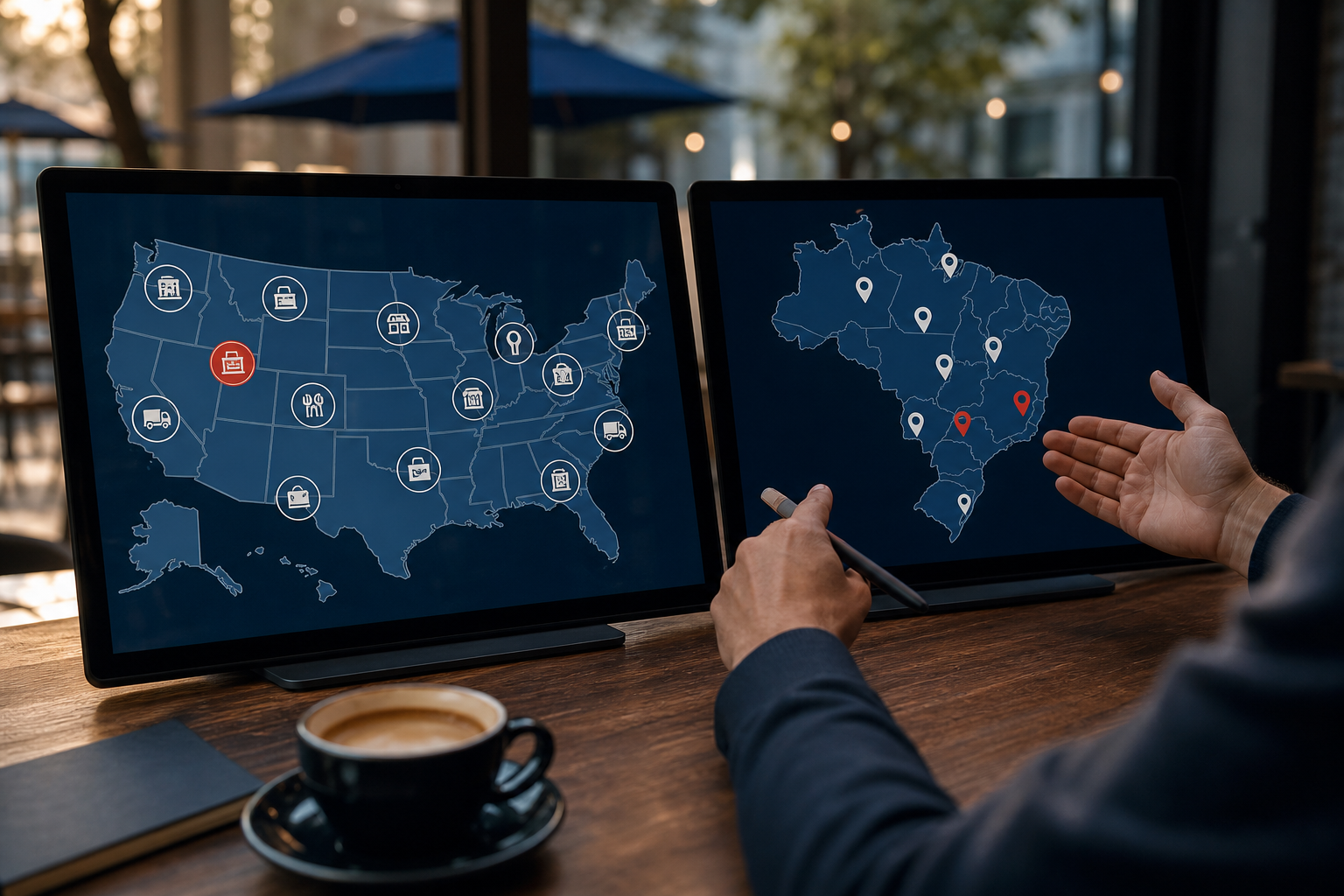
Picture yourself at a coffee shop in Miami or São Paulo, doesn't really matter which, with two tabs open on your laptop. One shows a directory of American franchises with dozens of segments you never imagined could even be franchised. The other shows the same exercise, but for the Brazilian market. And the question that lingers is simple: why does the franchise model seem so much more mature in the US? And what does that actually mean for someone looking to invest there?
This comparison isn't just idle curiosity. It changes how you evaluate risk, operating timelines, and even the type of business that fits your profile. Let's break it down.
Two Markets, Two Different Histories
Franchising in the United States took root back in the 19th century, with sewing machine manufacturers and later soft drink bottlers building networks of licensed distribution. Decades of growth led to a solid regulatory ecosystem: the FTC Franchise Rule, which requires every network to hand candidates a Franchise Disclosure Document (FDD) before any signature happens, with standardized information on fees, litigation history, obligations, and support structure.
In Brazil, franchising is regulated under Law 13.966/2019, a more recent statute partly inspired by the American model, though the country is still building case law and a culture of transparency in the domestic market. That doesn't make the Brazilian model worse, just younger. And it's exactly this regulatory maturity in the US that gives international investors a document they can use to compare networks objectively, something still taking shape elsewhere in the region.
Sector Diversity Is the Real Practical Difference
Take a look at the American franchise market and the first thing that jumps out is just how many segments exist beyond the obvious fast food category. There are franchised networks in home maintenance, auto detailing, senior care, pediatric therapy services, pet care, early childhood education, niche fitness, commercial cleaning, and the list keeps growing. Many of these segments barely exist as a franchise model in Brazil, or they're only just emerging.
This happens because American consumers have historically outsourced more of their day to day tasks. Hiring someone to mow the lawn, clean the house every week, or take the dog to the groomer isn't a luxury, it's routine for a large share of the American middle class. This consumption habit sustains entire networks of recurring service franchises, a model that appeals a lot to Brazilian investors because it tends to call for a leaner operation, without the complexity of a customer facing storefront, an industrial kitchen, or a large fixed staff.
In Brazil, food service and fashion retail still make up a large share of franchised brands, with the services sector growing more slowly, even if it's expanding. This isn't a question of quality, it's a matter of how far consumer behavior and the outsourcing culture itself have matured.
What This Changes When Choosing Where to Invest
When a Brazilian investor decides to open a business in the US, they're not just changing countries, they're stepping into a market with a different customer behavior logic and a different franchisor support structure. That can be a real advantage: more segment options, standardized documentation for comparing networks, and in many cases, operations designed to run with a smaller team.
| Aspect | United States | Brazil |
|---|---|---|
| Disclosure regulation | FDD required, standardized by the FTC | Law 13.966/2019, still consolidating |
| Diversity of franchised segments | Broad, including home services and health niches | Concentrated in food, retail, and education |
| Culture of service outsourcing | Established for decades | Growing, more recent |
| Operating currency | US Dollar | Brazilian Real |
| Documentation for comparing networks | Standardized and public (FDD) | Less standardized across networks |
This table doesn't replace a careful read of each specific brand's FDD, but it helps explain why the due diligence process looks different once you cross the border.
Trends Worth Watching Before You Decide
A few trends keep coming up in conversations we have with investors and in reports from American franchising associations, though none of this should be read as a projection of results for any specific business:
First, growth in models with lower dependence on a physical storefront, operating out of a van, a small office, or even from home, which cuts down on logistical complexity for someone starting out in a new country.
Second, the rise of segments tied to preventive health, wellness, and senior care, driven by demographic shifts in the United States.
Third, growing interest from Latin American investors in businesses that generate recurring revenue in dollars, as a way to diversify assets exposed to more volatile currencies. This isn't a guarantee of profitability, it's a portfolio consideration that many investors already weigh before even thinking about franchising.
Fourth, American networks are increasingly open to international franchisees, with approval processes that already account for candidates coming from Brazil, Mexico, Colombia, and other countries in the region, though each brand has its own eligibility criteria and prior experience requirements.
Where the Real Decision Comes In
Understanding this broader landscape is the first step, but the actual choice of segment, brand, and investment structure depends on your profile, available capital, and, when relevant, the visa route you plan to pursue, whether E-2 or EB-5, always evaluated by licensed immigration attorneys, since every case has particularities that only a specialist can assess safely.
This is exactly where TFG's consulting comes in: helping you filter through the diversity of the American market to find which segments and brands make sense for where you are right now, with a structured business plan from the first conversation through opening day, at no extra cost to you.
If you've made it this far thinking about how this market applies to your specific situation, the next step is a no commitment conversation with one of our consultants. We'll sit down with you, understand your goals, and help you see clearly which path makes the most sense within this whole picture.
Comments
Be the first to comment.
Ready to find your path?
Take the 2-minute quiz. Our team shows you what fits your capital and your timeline.