
Service Franchise vs. Retail Franchise: How to Compare Before You Choose
September 02, 2026 · The Franchise Group USA

You open your laptop, browse a few American franchise websites, and within twenty minutes, you've got a list of eight different segments: residential cleaning, food trucks, aesthetic clinics, language schools, pet shops, auto repair shops, and small business consulting. They all sound appealing. Everyone seems to be saying "now's the perfect time." So the burning question is: how do you compare these options beyond just personal preference?
The answer starts before you even consider a specific brand. Before diving into any particular franchise system, there's a fundamental structural decision that completely shapes your experience as a business owner: Will you operate a service business or a retail one? This choice dictates the kind of location you'll lease, your team size, how much the business relies on your physical presence, how revenue fluctuates throughout the year, and where your initial investment truly goes.
What Changes When You Operate a Service vs. a Retail Business
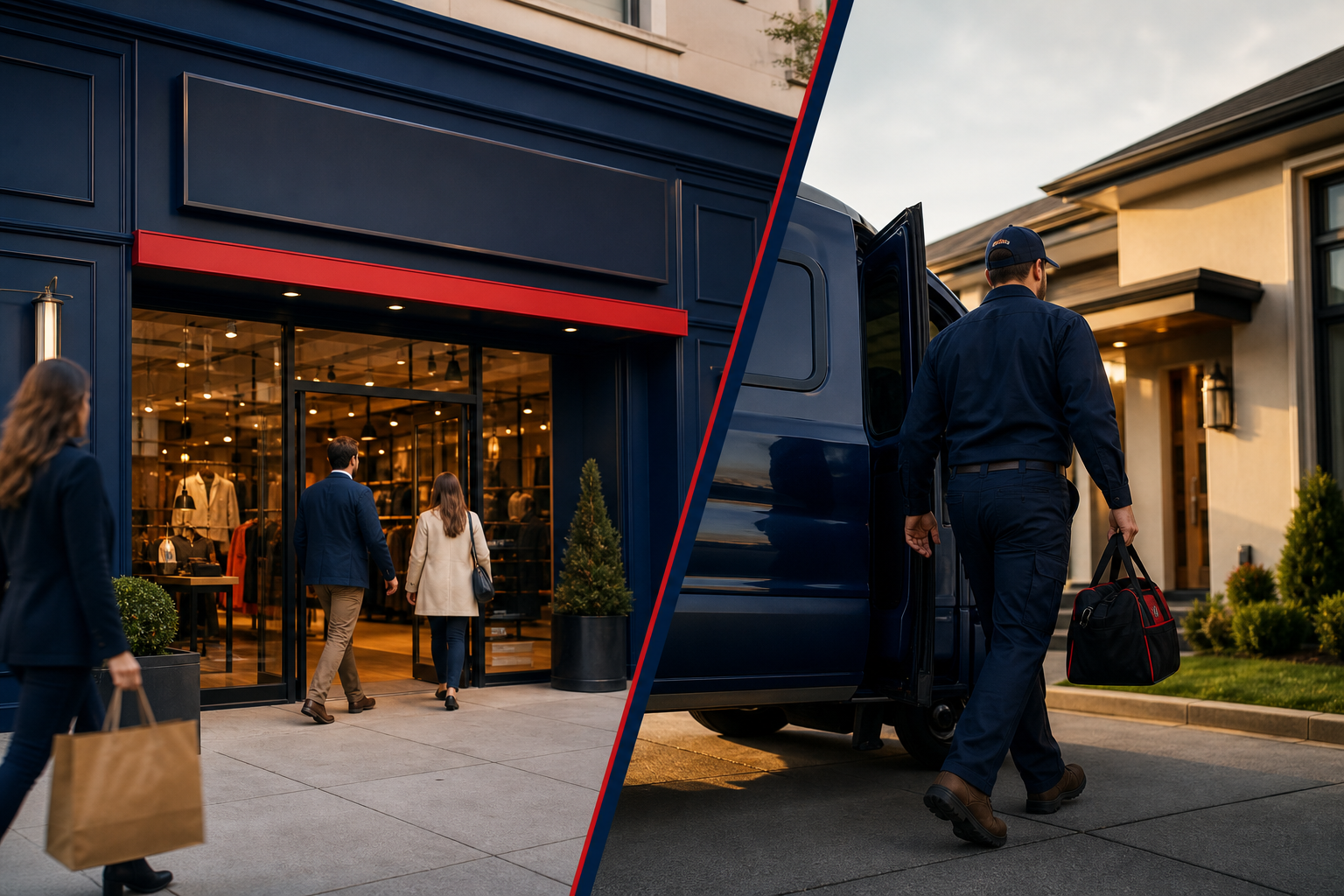
Retail franchises sell a physical product from a brick-and-mortar location that customers visit, or sometimes reach customers via a truck, kiosk, or pop-up. Think food service, pet shops, and certain automotive franchises selling parts and accessories. Success in retail heavily depends on location, foot traffic, window displays, inventory turnover, and a customer service team that often experiences high turnover.
Service franchises deliver a solution, not a tangible product. This category includes residential cleaning, home maintenance, health and wellness, early childhood education, automotive repair shops, and the growing sector of business-to-business (B2B) services like accounting, outsourced HR, or consulting. A physical storefront often carries less weight; sometimes it's just a support office. What truly sustains these businesses is the quality of execution and building a trusting relationship with the client.
This distinction changes everything that follows: the investment profile, the type of day-to-day management you'll be doing, and even how long it takes for the business to "run itself."
Comparing by Category, Not by Brand
The right choice isn't about deciding "retail is better" or "service is better." It's about understanding what each category demands from you as an owner.
| What Changes | Retail | Services |
|---|---|---|
| Location Type | Storefront, kiosk, or truck with foot traffic | Support office, van, or on-site client service |
| Team | Larger, often with high turnover, focused on customer service and transactions | Smaller and more specialized, with specific training |
| Owner Involvement | Moderate; the physical location and system drive business | High initially, decreases as the technical team gains autonomy |
| Seasonality | Often has clear seasonal peaks | Varies by segment, but tends to be more stable throughout the year |
| Inventory's Investment Weight | High; physical product ties up capital | Low or nearly non-existent |
While the table helps you spot general patterns, each segment has its own unique nuances. Food service, for instance, is retail with strong seasonality around holidays and vacation periods, requiring strict control over perishables. A pet shop is also retail, but with a more predictable purchasing cycle, as pet food and grooming supplies don't have such sharply defined "peak seasons."
On the service side, health and wellness typically require licensed professionals and state-specific regulations, which can alter the startup process. Residential services, like house cleaning and home maintenance, usually have fewer regulatory demands but depend heavily on travel logistics and scheduling. Early childhood education combines elements from both worlds: it has a physical location like retail, but the operation and parental trust function more like a service. Business-to-business services, such as consulting or administrative support, often have the least reliance on a physical storefront from the entire list, which appeals to those looking to operate with a lighter overhead.
How This Impacts Investment, Without Mentioning Specific Numbers
It's crucial to highlight something important here: no reputable consultant will discuss specific investment figures without the brand's Franchise Disclosure Document (FDD) on the table. That's because each franchise system sets its own fees and requirements. What you can compare beforehand are the categories that make up the investment and why they carry different weight between retail and service models.
In retail, investment tends to focus on leasehold improvements and build-out, fixed equipment, and initial product inventory. For services, the build-out is typically simpler, with a greater emphasis on operational equipment like vehicles or specialized tools, in addition to working capital to sustain operations during the initial months while the client base is still being established. Initial franchise fees and royalties exist in both models, but the proportion each category occupies in the total investment shifts considerably depending on the category.
Once an investor has a category in mind, the natural next step is precisely this: ask your TFG consultant for Item 7 of the FDD for prospective brands to get real numbers on the table and compare official data, not just estimates.
Common Questions That Come Up Next
Can I blend the two concepts? Hybrid models do exist, such as food service with a strong delivery and convenience component, or aesthetic clinics that sell retail products alongside their services. These often require dual management, so they tend to work best for those who already have experience managing larger teams.
Which category demands more owner presence initially? Generally, services do. Reputation is built person-by-person before the brand's system can "run itself." Well-located retail businesses tend to attract customers faster, but this doesn't excuse tight inventory and staff management.
Does this change by U.S. state? Yes, especially regarding regulations. Health and wellness, along with some automotive services, require specific state licensing. Labor laws, commercial zoning, and sanitation requirements also vary from state to state. This factors into your analysis, alongside your company's legal structure, a topic covered in our blog article on LLCs vs. Corporations.
What if I'm looking for an investor visa? Leaner service categories often fit well with E-2 visa profiles. However, this depends on the business plan and available capital, and it must be evaluated by licensed immigration attorneys. Our article on the E-2 investor visa for Brazilian investors details the process requirements.
The TFG's Role in This Choice
Comparing category by category is your initial filter, but the final decision on a specific brand within your chosen segment requires reviewing the FDD, understanding available territories, assessing franchisor support, and learning about the profile of existing franchisees in that system. This is precisely the work TFG undertakes with investors, from your very first conversation all the way through your grand opening, with no extra cost to you.
If you already know whether you prefer a storefront routine or a service-focused schedule, but you're still unsure which segment makes the most sense for your capital and current life stage, schedule a free consultation with a TFG expert. We'll help you transform that list of eight segments into a clear direction.
Comments
Be the first to comment.
Ready to find your path?
Take the 2-minute quiz. Our team shows you what fits your capital and your timeline.