
Franchise category
Restaurant, QSR & Catering Franchises in the USA
Everyone eats every day, but not every food concept is built to survive a bad month. Before you fall for a menu you love, the real question is whether the business behind it can actually protect your capital.
Why Food & Beverage Keeps Pulling Investors In
Restaurants, quick service concepts, and catering operations sit on top of a demand that never really goes away. People eat out of habit, convenience, and celebration, and that mix of motivations is part of what makes the category resilient across different economic moods. When budgets tighten, some households trade sit-down dinners for quick service instead of cutting food spending altogether, which is one reason well-run QSR and fast-casual brands tend to hold their ground even in slower years.
This segment also rewards a certain kind of investor: someone who wants a business with daily cash transactions, a visible product, and a routine that can be documented, taught, and repeated. That repeatability is exactly what franchising is built on. A strong food and beverage franchise isn't selling you a recipe; it's selling you a system for buying, staffing, preparing, and serving that recipe the same way every single time, in any city, under any manager.
It's a category that makes sense for investors who like operations with a pulse: real customers walking in, real lines, real feedback in real time. It tends to appeal less to someone looking for a fully passive check-writing role, and more to someone comfortable being close to the floor, at least in the early years.
How the Franchise Model Actually Works Here
Every legitimate franchise offering in the United States is governed by a Franchise Disclosure Document, or FDD, which the franchisor must give prospective franchisees before any money changes hands. In food and beverage, the FDD is where the real shape of the business becomes visible, well before you sign anything.
The initial franchise fee buys you the right to use the brand's name, systems, and support for a defined term. On top of that, most food and beverage franchisors charge an ongoing royalty, typically calculated as a percentage of gross sales, paid on a regular schedule for as long as the agreement runs. Many restaurant and QSR systems also collect a separate marketing or brand fund contribution, used for national or regional advertising that individual franchisees couldn't afford to run alone.
Territory in this category is usually defined around population density, traffic patterns, or a radius from the physical location, since a restaurant's customer base is inherently local and physical. The FDD spells out exactly how that territory is protected, or isn't, and that detail matters more in food and beverage than in almost any other kind of franchise, because a nearby location under the same brand can directly compete for the same lunch crowd.
Training and support are where franchisors either earn their fee or don't. In restaurants, that typically means structured onboarding covering food safety, kitchen operations, point-of-sale systems, and staff management, followed by ongoing field support once the doors open. The FDD outlines what the franchisor is contractually obligated to provide, which is different from what a sales conversation might promise.

A Week in the Life of a Restaurant Franchise Owner
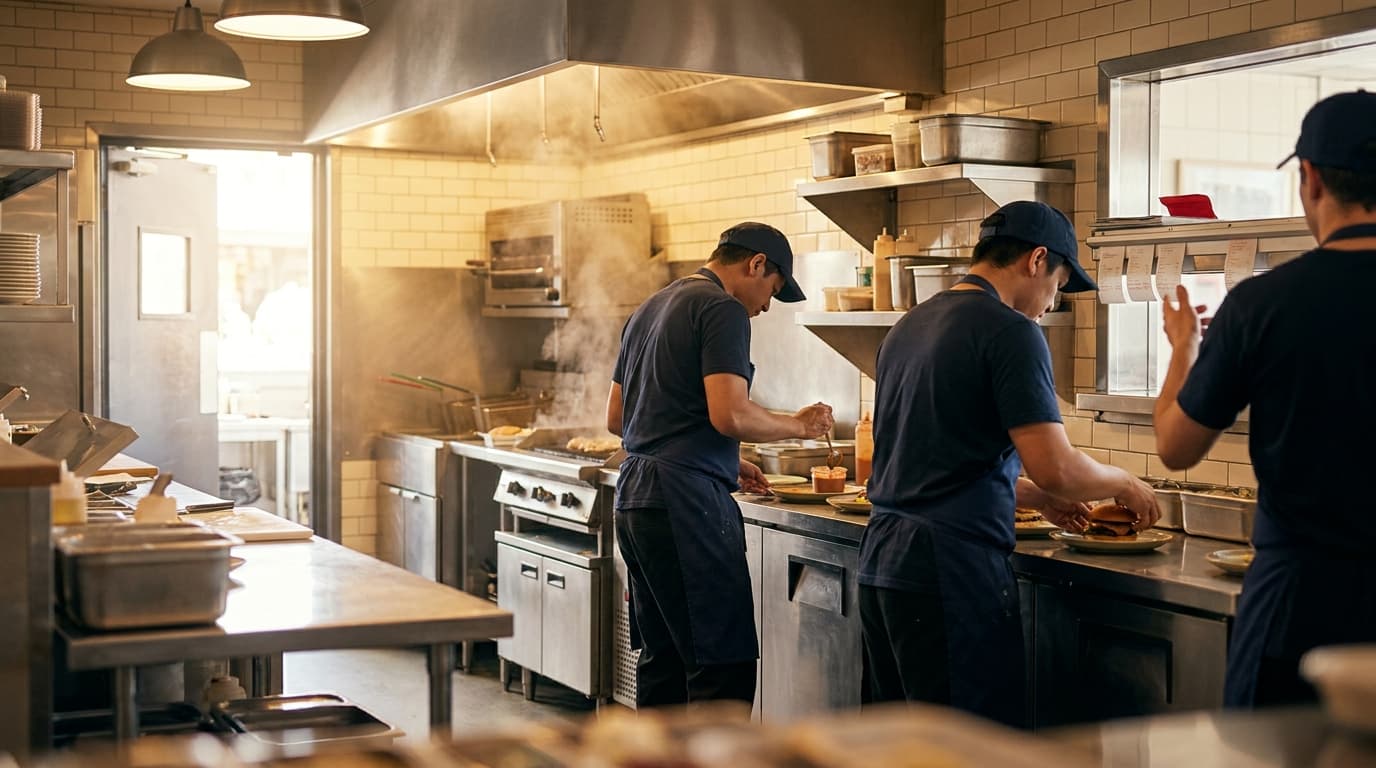
Food and beverage franchises span a wide operating spectrum. Some quick service and fast-casual concepts are built for an owner-operator who works the floor, manages shifts, and knows the regulars by name, especially in the first year or two while the location finds its rhythm. Others, particularly larger QSR or catering operations with an established general manager structure, move toward a semi-present model where the owner oversees numbers, staffing, and vendor relationships without running every shift personally.
Either way, a typical week involves inventory and food cost tracking, staff scheduling, labor cost management, and a close eye on daily sales against target. Catering-focused concepts add another layer: managing bookings, coordinating event logistics, and building relationships with corporate or private clients who order in volume. Multi-unit owners in this category often spend their week moving between locations, standardizing execution rather than doing the cooking themselves.
The common thread is that food and beverage is a people business first. Staff turnover, customer service consistency, and local reputation drive results as much as the product itself, which is why franchisors invest heavily in operational manuals and management training rather than leaving execution to chance.
What to Evaluate Before Choosing a Brand
Not every food and beverage franchise offer is built the same way, and the differences show up in the FDD long before they show up in a bank statement. A few things worth checking line by line:
- How territory is defined and protected, and whether the franchisor reserves the right to open or license another unit nearby.
- The full cost structure: initial franchise fee, ongoing royalty rate, marketing fund contribution, and any required technology or supply fees.
- What training and field support actually consist of, in writing, versus what gets mentioned informally during the sales process.
- Franchisee turnover and transfer activity disclosed in the document, which can hint at how satisfied existing owners really are.
Reading these details in isolation is hard, and comparing them across dozens of restaurant, QSR, and catering brands is harder still. This is the exact work TFG does with every brand in its catalog: reviewing the FDD point by point, cross-checking territory language, fee structures, and support commitments against how the brand actually performs on the ground. As a member of the Franchise Brokers Association with Franchise Sales Compliance certification, TFG treats that document review as the foundation of any recommendation, not an afterthought, and there's no added cost to the investor for that work.
Investing Through Immigration: E-2 and EB-5
For international investors, particularly from Brazil and across Latin America, a food and beverage franchise can align with certain U.S. investor visa routes. The E-2 visa, available to nationals of treaty countries, generally requires a substantial and at-risk investment in an active, operating business, and a restaurant or QSR franchise, with its physical location, staff, and documented systems, often fits that profile well. The EB-5 program follows a different logic tied to job creation and a larger capital commitment, and applies to a narrower set of situations.
None of this is a promise or a guarantee. Every visa strategy has to be evaluated case by case by licensed immigration attorneys, who look at the specific investor's background, the specific franchise structure, and current program requirements before any recommendation is made.
Where This Leads
If the food and beverage category is speaking to you, the next reasonable step isn't picking a brand off a list; it's understanding where you actually fit: your available capital, your appetite for day-to-day involvement, and whether an investor visa route is even part of your picture. That's what TFG's free diagnostic is built for. It's a short, guided first step that maps your profile, capital, and potential visa route in minutes, and it becomes the starting point for a real conversation with a consultant who already knows which brands in the catalog match what you're looking for. It's the formal first stage of the process, not a quiz you forget about the next day.
Start the process with your free diagnostic
It is the first formal step of the TFG process: a few minutes of questions map your capital, your timeline, and your possible route. Your consultant receives everything before the first conversation.
Start my free diagnosticFrequently asked questions
- How much does it cost to open a restaurant or QSR franchise in the USA?
- Costs vary widely by concept, from smaller quick service formats to full-service restaurants and catering operations. The exact initial franchise fee, build-out costs, and ongoing royalty are always disclosed in the franchisor's FDD, which is the document you should review line by line before comparing brands.
- Do I need restaurant experience to buy a food and beverage franchise?
- Most franchisors don't require prior restaurant experience, since the model is designed to be taught through structured training. What matters more is your willingness to be involved in daily operations, at least early on, and your ability to manage staff and follow an established system.
- Can a restaurant franchise qualify me for an E-2 or EB-5 visa?
- A restaurant or QSR franchise can align well with the E-2 visa profile because it's an active, operating business with real staff and a physical location. Whether it qualifies for you specifically, or whether EB-5 makes more sense, is a decision for licensed immigration attorneys based on your case.
- What's the difference between owning a QSR franchise and a full-service restaurant franchise?
- Quick service concepts generally have simpler kitchen operations, faster transaction cycles, and can sometimes run with a leaner management structure. Full-service restaurants typically involve more complex staffing, longer service cycles, and often demand closer owner involvement, especially in the first year.
- How is my territory protected in a restaurant franchise agreement?
- Territory protection language is spelled out in the FDD and usually tied to population, radius, or trade area around your location. It's one of the most important sections to review, since it determines whether the franchisor can place another unit nearby.
- Is a catering franchise more passive than a restaurant franchise?
- Catering-focused concepts can offer more schedule flexibility than a restaurant with daily walk-in traffic, but they still require active management of bookings, event logistics, and client relationships. Whether it functions as owner-operator or semi-present work depends heavily on the specific brand's structure, which is detailed in its FDD.
From the blog on this category
All articles →


Your next step has a name: diagnostic.
Answer the 2-minute questionnaire and receive your preliminary diagnostic on the spot. It is the same document that opens your conversation with a TFG specialist.
Educational content about the segment. It is not an offer of a specific franchise, financial advice, or legal advice. A franchise offer is made only by the franchisor, through the official disclosure document. Visa paths are always evaluated by licensed immigration attorneys.