
Franchise category
Maintenance & Repair Franchises in the USA: What to Know
A leaky pipe doesn't wait for a recession. Maintenance and repair franchises live on that simple truth, but not every system in this space is built the same way. Which one actually protects your capital?
Why Investors Are Looking at This Segment Now
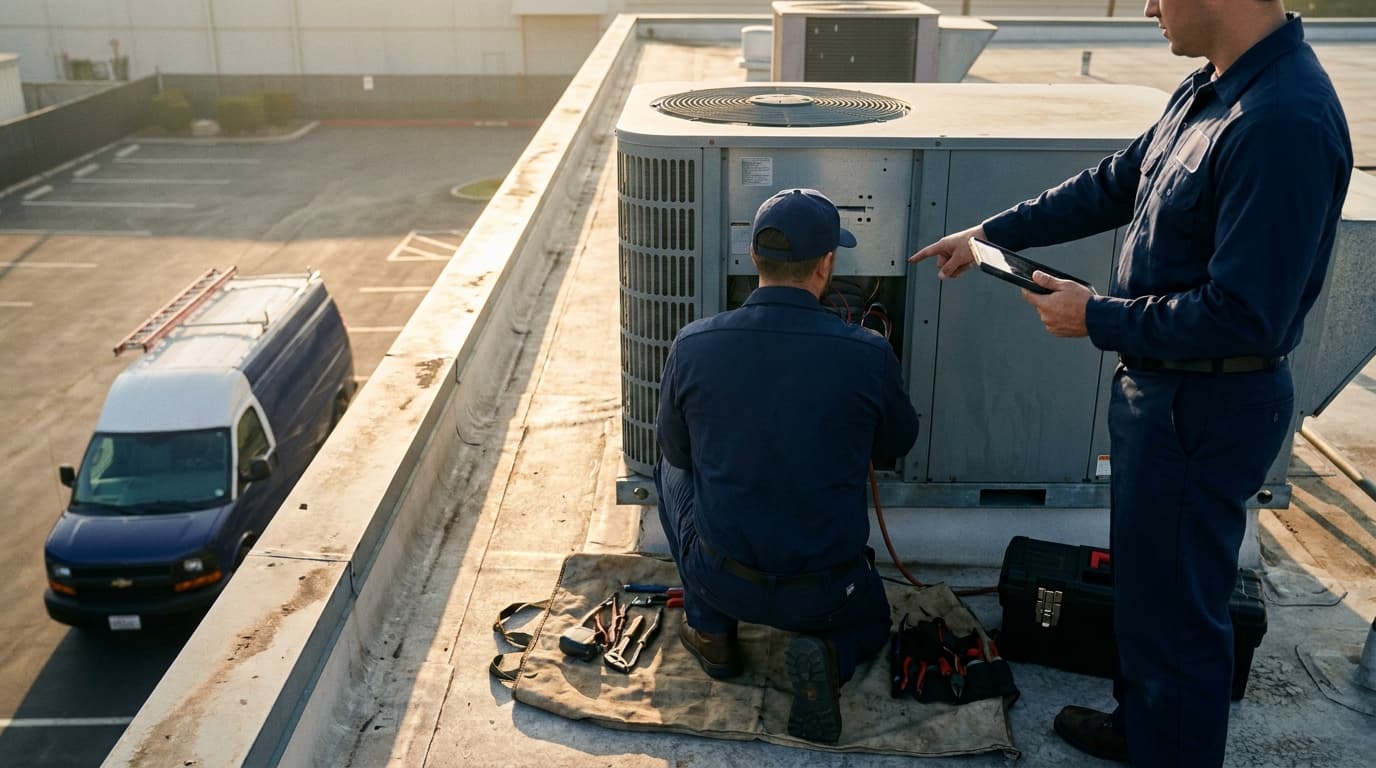
Homes age, lawns grow, equipment breaks down, and businesses can't afford downtime. That basic mechanic is what draws investors to the maintenance and repair category: it services a need that doesn't pause when the stock market wobbles. A broken water heater or an overgrown commercial lot isn't optional spending. It's the kind of expense a homeowner or a business owner handles right away, recession or not.
This category is broad by design. It covers one-time jobs and ongoing service contracts, lawn care, and repair work for consumers, homeowners, and businesses alike. That range is actually the appeal: a franchisee isn't betting on a single niche or a single customer type. There's residential work, there's commercial work, there's the one-off emergency call, and there's the recurring maintenance plan that keeps trucks on the road every week. For an investor who wants a business with repeat revenue built into the model rather than one-off transactions only, this is exactly the kind of category where that structure tends to show up.
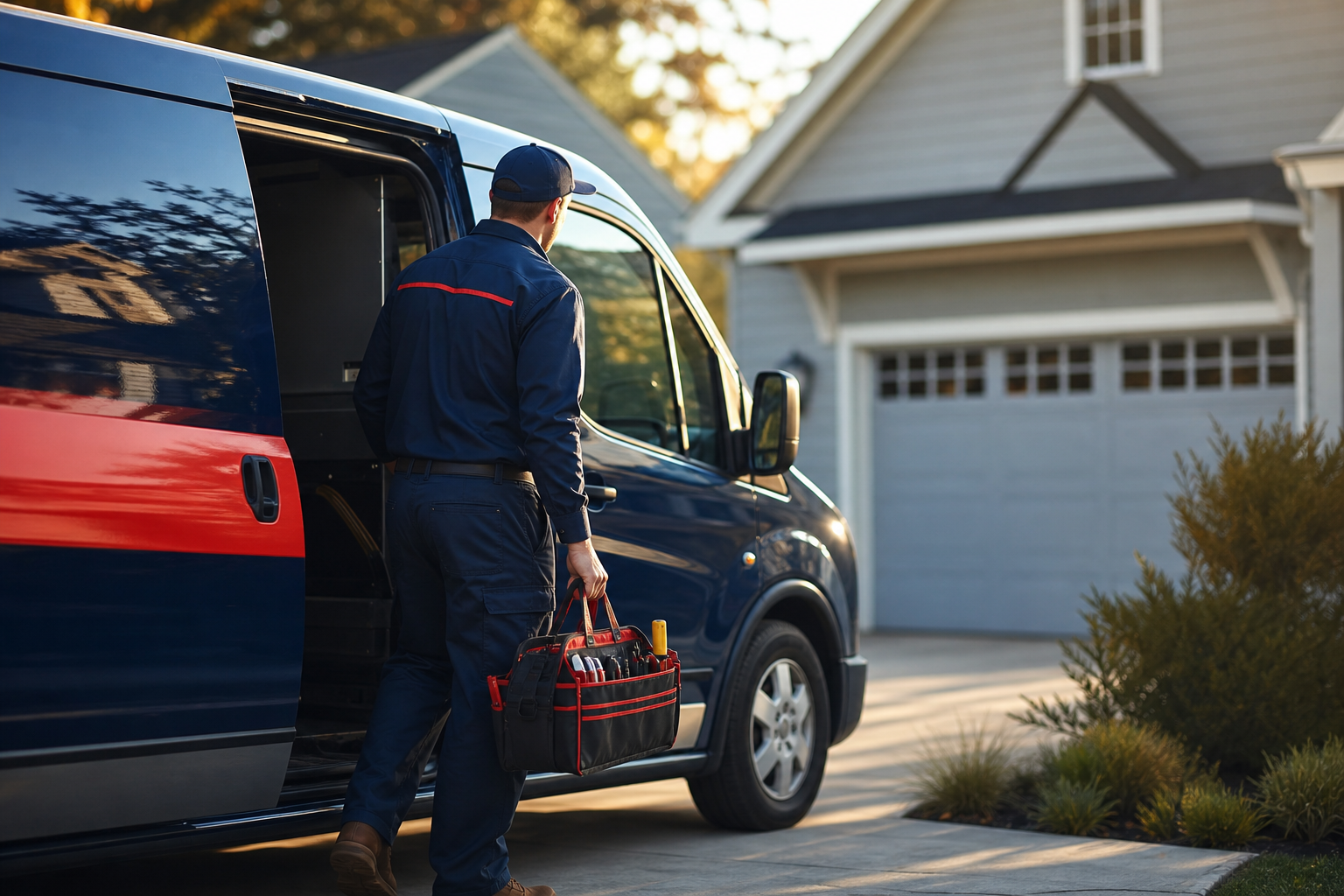
It also tends to appeal to a specific kind of investor: someone who wants a business rooted in a real, physical service, not a concept that depends on foot traffic to a storefront or a trend holding up. Repair and maintenance work doesn't need a retail location to succeed. Many models in this space operate from a home office, a small warehouse, or a fleet of service vehicles, which changes the entire cost conversation compared to a business that needs a lease on Main Street.
How the Model Works in Practice
Every franchise in this category is governed by its FDD, the disclosure document every franchisor in the U.S. is legally required to provide before you sign anything. That document is where the real structure lives, not in a sales pitch.
The initial franchise fee is what you pay to license the brand, its systems, and its territory rights. On top of that, most maintenance and repair franchises run on an ongoing royalty, a percentage of revenue paid regularly to the franchisor in exchange for continued use of the brand, the operating system, and support. Some also collect into a marketing fund that pays for national or regional advertising, which matters a lot in a category where local search and reputation drive the phone to ring.
Territory is one of the most important terms to understand here, and it varies a lot by brand. Some franchisors grant an exclusive geographic territory, often defined by population count or zip codes, protecting the franchisee from another location of the same brand competing for the same customers. Others use a more open or overlapping model. This single term can be the difference between a business that grows steadily within a protected patch of demand and one that competes with its own network for calls.
Training and support are also spelled out in the FDD, and they matter more in a hands-on category like this one than almost anywhere else. Technical training, whether it's HVAC-adjacent repair skills, lawn equipment operation, or general handyman-style trade knowledge, is usually part of the onboarding, alongside operational systems like scheduling software, dispatch, and customer communication tools.
A Week in the Life of the Owner
Maintenance and repair franchises span a wide range of owner involvement, and understanding where a given brand sits on that spectrum matters before you sign anything.
At one end, there's the owner-operator model: someone who's in the truck, on the job site, doing the work themselves in the early days while building a customer base and a reputation. At the other end, there are semi-absentee structures, where the franchisee hires and manages technicians, handles scheduling and vendor relationships, and spends more time running the business than doing the physical work.
A typical week for an owner in this space, regardless of which end they're on, tends to include managing a service calendar, following up on estimates, coordinating with technicians or crews, and keeping an eye on recurring maintenance contracts that renew month after month. It's a business built on routines and relationships as much as it is on tools and trucks, and that rhythm is part of what makes it approachable for someone coming from outside the trades.
What to Evaluate Before Choosing a Brand
Not every maintenance and repair franchise is structured the same way, and the differences show up in the FDD long before they show up in your bank account. A few things worth scrutinizing:
Territory definition. Is it exclusive, and how is it drawn? A vague or overlapping territory can quietly undercut your growth potential.
Fee and royalty structure. How is the initial franchise fee set, and what does the ongoing royalty actually fund in return? A higher royalty tied to real marketing and support can be worth more than a lower one with nothing behind it.
Training and support. Does the franchisor actually train on the technical side of the work, or just on the brand? In a hands-on category, the depth of technical onboarding matters as much as the business systems.
Franchisee turnover. The FDD discloses how many franchisees have left the system and why. A pattern worth watching, not a single data point in isolation.
This is precisely the kind of line-by-line review TFG performs across its catalog of vetted franchise brands, reading each FDD in detail before any recommendation is made. As a member of the Franchise Brokers Association with Franchise Sales Compliance certification, TFG applies that same scrutiny to every brand in this category, at no extra cost to the investor since compensation comes from the franchise system itself, standard practice in the brokerage industry.
Investment-Based Immigration, When It Fits
For international investors, particularly from Brazil and across Latin America, maintenance and repair franchises sometimes come up in conversations about the E-2 investor visa, which is available to nationals of countries with a qualifying treaty with the U.S. The active, hands-on nature of many models in this category, especially the owner-operator structure, can align with what E-2 adjudicators look for: a real, operating business, not a passive investment.
For larger-scale plans, EB-5 is a separate path entirely, tied to job creation and a different investment threshold. Neither route is guaranteed, and neither should be chosen based on a category alone. Every visa strategy needs to be evaluated by a licensed immigration attorney who can assess the specific brand, the specific investment, and the applicant's own background.
Where This Leads
Reading FDDs and comparing territory models is useful, but it only goes so far without knowing your own numbers, your timeline, and which brands in this category actually match your profile. That's what TFG's free diagnosis is for: it's the first formal step in the process, mapping your profile, available capital, and potential visa route in a matter of minutes. From there, the conversation with a TFG consultant gets specific, matching you against the catalog and, if it fits, connecting you with an immigration attorney to map the path forward. There's no cost to start, and no obligation to move forward until it makes sense for you.
Start the process with your free diagnostic
It is the first formal step of the TFG process: a few minutes of questions map your capital, your timeline, and your possible route. Your consultant receives everything before the first conversation.
Start my free diagnosticFrequently asked questions
- How much does it cost to open a maintenance and repair franchise?
- It varies significantly by brand, format, and territory size, and the real breakdown of initial fees, equipment, vehicles, and working capital is disclosed in each franchisor's FDD. Rather than a single number, look at the full picture the document lays out, including ongoing royalties and any marketing fund contributions.
- Do I need trade experience to own one of these franchises?
- Not necessarily. Many systems in this category are built for owner-operators without prior technical experience, providing training on both the trade skills and the business operations as part of onboarding. Others favor a semi-absentee model where the owner manages the business while hired technicians handle the hands-on work.
- Is a maintenance and repair franchise recession-resistant?
- Repairs and essential maintenance tend to be non-discretionary spending for homeowners and businesses, which is part of why this category attracts investors looking for steady demand. That said, resilience depends on the specific service, the local market, and how the franchise is run, so it's not a guarantee tied to the category alone.
- What's the difference between owner-operator and semi-absentee models in this space?
- An owner-operator is directly involved in the physical work, at least in the early stages, while a semi-absentee owner manages the business, staffing, and customer relationships without performing the service work themselves. Which model fits depends on your goals, your available time, and the specific brand's structure.
- Can I use this type of franchise for an E-2 or EB-5 visa?
- Maintenance and repair franchises, especially owner-operator formats, sometimes align well with the active-business requirements of the E-2 visa, while EB-5 follows a different, job-creation-based path. Any visa strategy needs to be reviewed by a licensed immigration attorney based on your specific situation and the brand under consideration.
- How do I know if a franchise's territory is actually protected?
- The FDD spells out whether the territory granted is exclusive and how its boundaries are defined, often by population count or zip codes rather than a simple radius. This single detail can significantly affect how much competition you face from other locations of the same brand down the road.
From the blog on this category
All articles →

Your next step has a name: diagnostic.
Answer the 2-minute questionnaire and receive your preliminary diagnostic on the spot. It is the same document that opens your conversation with a TFG specialist.
Educational content about the segment. It is not an offer of a specific franchise, financial advice, or legal advice. A franchise offer is made only by the franchisor, through the official disclosure document. Visa paths are always evaluated by licensed immigration attorneys.