
Franchise category
Restoration Franchises: A First Responder Business Model
Water, fire, sewage, vandalism: property damage never takes a season off. Is a first responder franchise the recession-resistant business you've been looking for?
Why Restoration Is Pulling Investor Attention Right Now
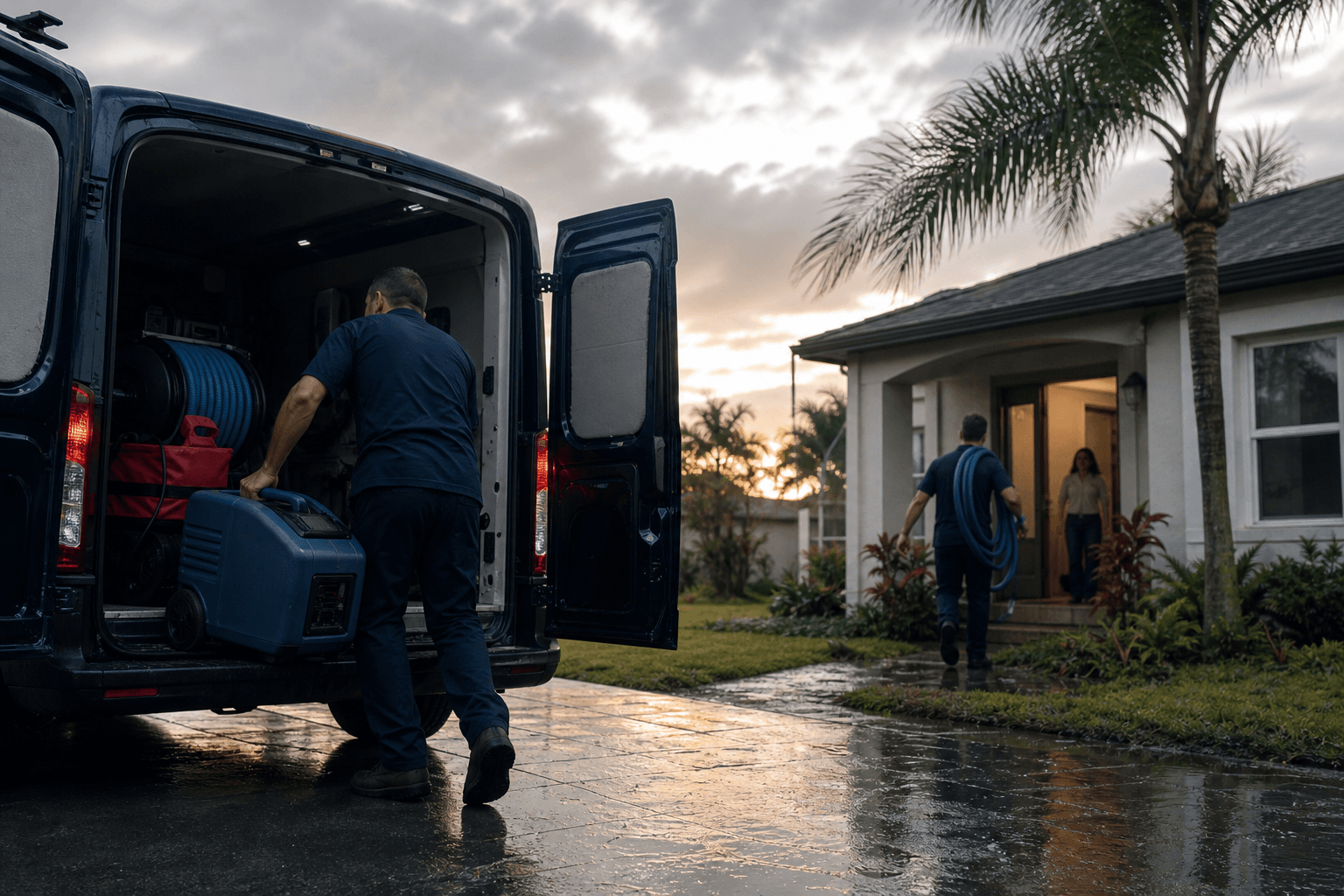
Property damage doesn't check the calendar or the economy before it happens. A burst pipe at 2 a.m., a kitchen fire, a sewage backup after a storm: these events generate demand regardless of whether the broader economy is expanding or contracting. That's the core appeal of the restoration category. It sits closer to insurance claims and emergency response than to discretionary consumer spending, which gives it a different risk profile than retail or hospitality concepts.
This segment tends to attract a specific kind of investor: someone who wants a business with a genuine operational backbone, not a storefront waiting for foot traffic. Restoration franchises are built around dispatch, crews, equipment, and relationships with insurance adjusters and property managers. It rewards people who like running a tight logistics operation and who are comfortable being the business that gets called when something goes wrong. It also tends to appeal to investors who want a model that isn't dependent on a single retail location, since a restoration business is defined by its service territory, not by a storefront.
For international investors, this combination matters. A first responder business model with steady underlying demand is easier to explain to a lender, a partner, or an immigration attorney than a trend-driven concept whose demand could soften in a downturn.
How the Model Actually Works
Every restoration franchise operates under a franchise agreement, and the specifics of that agreement live in the FDD, the official disclosure document the franchisor is required to provide before any money changes hands. That's where the real numbers sit: the initial franchise fee, the ongoing royalty structure, any required marketing contribution, and the exact boundaries of the assigned territory. Nobody should rely on a website or a sales call for those figures. The FDD is the source, always.
What the FDD generally covers in this category, in plain terms:
- Initial franchise fee: what you pay to license the brand, systems, and territory rights. It typically varies depending on territory size and market.
- Royalties: an ongoing percentage tied to revenue, paid for the life of the agreement, in exchange for continued use of the brand and system.
- Territory: restoration franchises are usually built around a protected geographic area, often defined by population or household density rather than a fixed radius. This is one of the most important variables to understand before signing anything.
- Training and support: initial certification-style training on mitigation techniques, equipment use, and claims handling, followed by ongoing operational and marketing support from the franchisor.
The franchisee's real job is building and running the crew, managing equipment, and maintaining the referral relationships (insurance agents, adjusters, property managers, real estate agents) that generate call volume. The brand and the system are licensed; the local execution is entirely on the operator.

What the Owner's Week Actually Looks Like
Restoration is rarely a fully passive investment, but it also isn't a job where the owner is always the one holding the hose. Most systems in this category are built around an owner-operator or an executive-model owner who manages the business rather than performing every job personally.
A typical week involves reviewing incoming jobs and dispatch schedules, checking in with crew leads, managing relationships with adjusters and referral partners, keeping equipment maintained and certified, and handling the administrative side of insurance billing and documentation. As the business grows, owners typically hire a crew chief or operations manager to run day-to-day jobs, which shifts the owner's time toward sales, referral relationships, and managing the P&L rather than being on-site for every call.
This is worth sitting with honestly. If the idea of managing a dispatch calendar and being reachable for emergency calls sounds energizing rather than draining, this category tends to be a good fit. If you're looking for something closer to a fully hands-off investment from day one, that's a conversation worth having early, before you commit to a specific brand.
What to Evaluate Before Choosing a Brand
Not every restoration franchise system is built the same way, and the differences show up in the FDD, not in the sales pitch. A few things worth scrutinizing:
| What to Check | Why It Matters |
|---|---|
| Territory definition | Determines whether your market is truly protected or open to overlap from other franchisees |
| Training depth | Signals whether the franchisor actually prepares you for certifications and claims work, or leaves you to figure it out |
| Franchisee turnover | A pattern of departures or transfers in the FDD can point to a system that's harder to operate than it looks |
The table above shows why the same category can produce very different ownership experiences depending on the system behind it.
Beyond territory, training, and turnover, it's worth looking at how the franchisor handles national accounts (large insurance or property management contracts that get routed to local franchisees), what the ongoing support actually consists of after the first year, and how the fee and royalty structure compares to what similar systems ask for in exchange for their support.
This is precisely the analysis TFG performs before recommending anything. As a member of the Franchise Brokers Association and holder of the Franchise Sales Compliance certification, TFG reviews FDDs item by item across a catalog of vetted brands, comparing territory structures, training programs, and franchisee turnover patterns before ever pointing an investor toward a specific system. That review, plus the ongoing guidance from diagnostic through opening, comes at no extra cost to the investor. Compensation flows from the franchise system, as is standard across the brokerage industry.
Immigration by Investment: Where This Category Fits
Restoration franchises come up often in conversations about the E-2 investor visa, largely because the model requires active, hands-on management and a real operational commitment, which aligns with what E-2 adjudicators look for in a qualifying enterprise. Some larger, more capital-intensive builds in this space are also discussed in the context of EB-5, though that pathway has its own separate requirements around job creation and capital source.
None of this is a guarantee. Every visa strategy needs to be evaluated by a licensed immigration attorney who can review the specific franchise, the investor's background, and the capital structure before any filing decision is made. TFG works alongside licensed immigration partners precisely so that the business decision and the legal decision happen in coordination rather than in isolation.
Where This Conversation Actually Starts
Reading about the model is useful, but it doesn't tell you whether a restoration franchise fits your capital, your risk tolerance, and your visa timeline specifically. That's what the free TFG diagnostic is for. It's not a quiz you fill out and forget. It's the first formal step of the TFG process: mapping your profile, your available capital, and your potential visa route in a matter of minutes, which becomes the foundation for the working conversation with a consultant who already knows where you stand before the call even starts.
Start the process with your free diagnostic
It is the first formal step of the TFG process: a few minutes of questions map your capital, your timeline, and your possible route. Your consultant receives everything before the first conversation.
Start my free diagnosticFrequently asked questions
- How much does it cost to open a restoration franchise?
- The exact initial franchise fee, royalty structure, and total investment range are disclosed in each franchisor's FDD, and they vary by territory size and market. There's no reliable industry-wide number to quote; the official document for the specific brand is the only accurate source, and that's the material TFG reviews before making any recommendation.
- Do I need construction or trades experience to run a restoration franchise?
- No, most systems are designed for owners who manage the business rather than perform the technical work themselves. Crews handle the hands-on mitigation and repair, while the owner focuses on dispatch, referral relationships, and overall operations.
- Is restoration a recession-proof business?
- No business is fully immune to economic cycles, but restoration demand is driven by property damage events like water, fire, and sewage issues rather than discretionary consumer spending. That makes it less exposed to downturns than many retail or hospitality concepts.
- Can a restoration franchise qualify for an E-2 visa?
- It can be a strong fit because the model typically requires active, hands-on management, which aligns with E-2 criteria. Final qualification always depends on the specific franchise, the investor's capital structure, and a review by a licensed immigration attorney.
- How is a restoration franchise's territory usually defined?
- Most systems assign territory based on population or household density rather than a simple radius, and the exact boundaries and protections are spelled out in the FDD. Reviewing that definition closely is one of the most important steps before signing with any brand.
- Is running a restoration franchise a full-time job?
- In most cases, yes, at least in the early stages, since the owner is typically managing dispatch, crews, and referral relationships. As the business matures, many owners bring in a crew chief or operations manager, which shifts their own time toward sales and oversight.
From the blog on this category
All articles →


Your next step has a name: diagnostic.
Answer the 2-minute questionnaire and receive your preliminary diagnostic on the spot. It is the same document that opens your conversation with a TFG specialist.
Educational content about the segment. It is not an offer of a specific franchise, financial advice, or legal advice. A franchise offer is made only by the franchisor, through the official disclosure document. Visa paths are always evaluated by licensed immigration attorneys.