
Franchise category
Food Store & Catering Franchises in the USA
People eat every day, rain or recession. So why do so many convenience food and catering franchises look completely different on paper than they do behind the counter? The gap is exactly where a bad investment hides.
Why This Segment Is Pulling In Investors Right Now
Convenience food and catering sit on top of a demand that doesn't take a season off. People need a fast meal on a Tuesday and a full tray of food for a Saturday event, and both needs repeat month after month regardless of what the stock market is doing. That's the core appeal for an international investor: this is not a discretionary luxury category that disappears the moment consumer confidence dips. It's built into how households and businesses already operate.
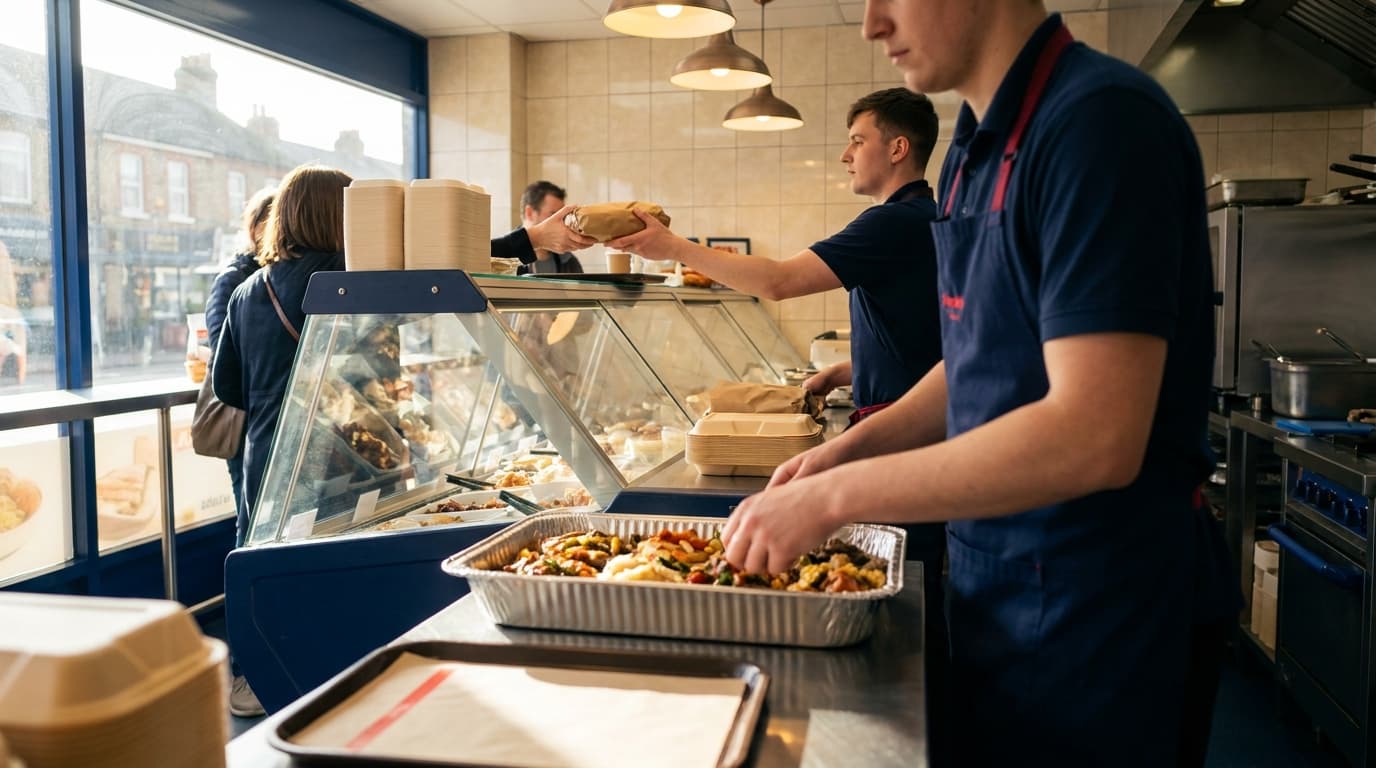
The segment covers two related but distinct businesses. Convenience food stores are retail-first: a physical location, walk-in traffic, and a menu built for speed. Catering is service-first: the product travels to the customer, often tied to events, offices, or recurring corporate accounts. Some franchise systems blend both, using a storefront as a production base and catering as a second revenue channel with its own margins.
For an investor coming from Brazil or elsewhere in Latin America, the appeal is straightforward. These are categories the American consumer already understands and already pays for, which means less time spent creating demand and more time spent capturing it well. It's also a segment where a hands-on operator, or a well-managed general manager, can run day-to-day operations without needing to reinvent the product every quarter.

How the Model Actually Works
Every legitimate franchise in this space is governed by a Franchise Disclosure Document, or FDD, the federally mandated document every franchisor must give a prospective buyer before any money changes hands. It's the single most important piece of paper in this entire decision, and it's where the real terms live, not in a sales conversation.
The FDD spells out the initial franchise fee, which buys the right to open under the brand and use its system. On top of that comes an ongoing royalty, typically a percentage of gross sales, paid to the franchisor for as long as the location operates. Many systems in this category also collect a separate contribution toward a marketing fund, since brand visibility matters a lot in food.
Territory is defined in the FDD too, and this is where systems differ sharply. Some grant a genuinely protected radius or population-based territory; others define territory loosely enough that a second unit could open uncomfortably close. For catering-heavy concepts, territory sometimes extends to a defined delivery or service radius rather than a fixed storefront zone.
Training and ongoing support are also documented, not just promised. A stronger system spells out how many days of initial training happen, whether there's field support after opening, and what marketing and supply-chain assistance actually continues once the ribbon is cut. This is where "franchise" earns its meaning: you're not just buying a name, you're buying a tested operating system.
What the Owner's Week Actually Looks Like
Convenience food formats tend to lean toward active, on-site ownership, at least early on. Someone needs to manage food safety, staffing, inventory turnover, and the rhythm of peak hours. Many owners run the location themselves for the first stretch, then transition toward a general-manager model once systems and staff are proven.
Catering operations often allow for more semi-absentee flexibility, particularly once a kitchen team and delivery logistics are established. The owner's real job shifts toward sales and account management: building relationships with corporate clients, event planners, and repeat customers, while a kitchen crew handles execution.
A typical week in either format includes supplier and inventory management, staff scheduling, quality checks, and reviewing sales against labor costs. Catering adds calendar management for bookings and quoting. Neither format is passive, but the level of physical presence required varies meaningfully by brand, and that's a detail worth confirming before signing anything.
What to Evaluate Before Choosing a Brand
This is where most investors either protect their capital or expose it, and it all comes down to reading the FDD carefully rather than relying on a pitch deck.
- Territory protection: is it a clearly defined, exclusive area, or vague enough to allow encroachment later?
- Fee structure: how do the initial franchise fee and ongoing royalty compare to what similar systems in the category charge, and what does that royalty actually fund?
- Training and support: does the franchisor commit to specific, ongoing support, or is initial training the extent of it?
- Franchisee turnover: how many locations have closed, transferred, or been terminated, a strong signal of whether existing owners are succeeding or struggling?
Here's a simple way to think about the range of systems in this category:
| Factor | Weaker System | Stronger System |
|---|---|---|
| Territory | Loosely defined, open to overlap | Clearly bounded, protected |
| Support | Training only at launch | Ongoing field and marketing support |
| Turnover | High rate of closures or transfers | Low, stable ownership base |
Note: this table illustrates general patterns disclosed across franchise documents in this category, not figures from any specific brand.
This item-by-item review, comparing fee structures, territory language, and turnover data across dozens of systems, is precisely the work TFG does before recommending anything. As a Franchise Brokers Association (FBA) member with Franchise Sales Compliance (FSC) certification, TFG works through a curated catalog of verified brands and reads the FDD closely before a single conversation about "which brand" happens. That review costs the investor nothing; TFG is compensated by the franchise system, standard practice in the brokerage industry.
Investment-Based Immigration: Where It Fits
For international investors, food and catering franchises are sometimes structured with an E-2 or EB-5 visa pathway in mind, since both categories often involve real capital investment and, in many cases, staffing that supports a visa case. Neither TFG nor this page makes any promise about visa outcomes. Every immigration route is a legal matter, evaluated case by case by licensed immigration attorneys who work alongside TFG once a brand and structure are identified.
The right question isn't "does this franchise guarantee a visa," because none legitimately can. It's "does this brand's investment size, operating structure, and job creation profile fit the visa category my attorney and I are targeting." That's a conversation worth having early, not after a franchise agreement is signed.
Your Next Step
None of this needs to be figured out alone or from a sales page. The free TFG diagnostic is the formal first step: in a few minutes, it maps your investor profile, available capital, and potential visa route, and that becomes the foundation for a real conversation with a TFG consultant about where you fit inside the food store and catering category, and which specific brands in the catalog deserve a closer look at their FDDs.
Start the process with your free diagnostic
It is the first formal step of the TFG process: a few minutes of questions map your capital, your timeline, and your possible route. Your consultant receives everything before the first conversation.
Start my free diagnosticFrequently asked questions
- How much does it cost to open a food store or catering franchise in the US?
- Costs vary widely across the category and are always disclosed in detail in the franchisor's FDD, covering the initial franchise fee, buildout or equipment costs, and ongoing royalties. Rather than relying on averages, TFG reviews the specific FDD for each brand a client is considering so the real investment range is clear before any commitment.
- Do I need restaurant experience to own a franchise in this category?
- Most systems in this space are designed to be operated without prior food-service experience, since the franchisor provides initial training and an established operating system. That said, comfort with staff management and daily operations matters, especially for owner-operated convenience food formats.
- Can a food or catering franchise support an E-2 or EB-5 visa?
- Some brands in this category are structured in ways that align with E-2 or EB-5 requirements, particularly around capital investment and job creation, but this always depends on the specific brand and the investor's case. Any visa strategy needs to be evaluated and confirmed by a licensed immigration attorney.
- What's the difference between owning a convenience food store and a catering franchise?
- A convenience food store is retail-first, built around walk-in traffic and a physical location, while catering is service-first, delivering food to events, offices, or recurring accounts. Some franchise systems combine both under one operation, using a storefront as a production base for catering orders.
- How involved does the owner need to be day to day?
- It depends on the format: convenience food locations often require more hands-on, on-site management, especially early on, while catering operations can allow for more semi-absentee involvement once a kitchen team and logistics are established. The FDD and franchisor interviews are the best source for understanding the expected time commitment for a specific brand.
- How does TFG help me choose the right franchise in this category?
- TFG reviews the FDD for any brand under consideration, checking territory protection, fee structure, training and support commitments, and franchisee turnover before making a recommendation. This review is done at no extra cost to the investor, since TFG is compensated by the franchise system, and it's the basis for matching a client to the right brand in the catalog.



Your next step has a name: diagnostic.
Answer the 2-minute questionnaire and receive your preliminary diagnostic on the spot. It is the same document that opens your conversation with a TFG specialist.
Educational content about the segment. It is not an offer of a specific franchise, financial advice, or legal advice. A franchise offer is made only by the franchisor, through the official disclosure document. Visa paths are always evaluated by licensed immigration attorneys.